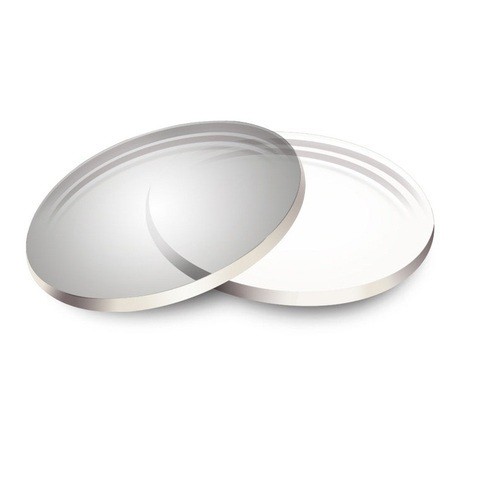
Types of Lenses and Lens Treatments
Besides the standard prescriptions, there are a variety of lens options when choosing your glasses. Your optometrist may suggest one or more lens treatments, while you may want to add others based on your lifestyle or career.
Glass Lenses
Glass lenses provide excellent visual acuity. However, they are very heavy and prone to cracking and shattering. Their substantial weight and potential safety issues have caused them to become unpopular. They are still available, but most lenses are made of some type of plastic now.
Plastic Lenses
Most lenses these days are made out of plastic because they can produce similar results to glass. Plastic is cheaper, lighter, and safer than glass.
High-Index Plastic Lenses
High-index plastic lenses are even thinner and lighter than most plastic lenses.
Polycarbonate and Trivex Lenses
Polycarbonate plastic lenses are standard in safety glasses, sports goggles, and children’s eyewear. They are lightweight and impact-resistant, making them much less likely to crack or shatter.
Similarly, Trivex is a lightweight and durable plastic that can be used in high-risk environments. These lenses are also thinner than basic plastic lenses, but not as thin and lightweight as high-index lenses.
Aspheric Lenses
Aspheric lenses are flatter and thinner. This makes them a great choice for stronger prescriptions that need thicker lenses. They also reduce unwanted magnification of the wearer’s eyes. They may also increase visual acuity in some cases.
High-Definition Lenses
Some companies use computer-controlled surfacing technology to create free-form or wavefront lenses to take your visual acuity to the next level. These will be much more expensive than traditional lenses.
Photochromatic (Transition) Lenses
Photochromatic lenses, commonly known as Transitions, are a popular choice. They darken when they are exposed to UV rays, which eliminates the need for sunglasses. They are available in all prescription lens types.
Scratch-Resistant Coating
Applying a clear scratch-resistant coating to the front and back of lenses increases their durability and helps them last longer. Most modern lenses come with scratch-resistance built-in, but if yours don’t, you can usually add it for a small additional cost.
Anti-Reflective Coating
Anti-reflective coating, also called AR coating or anti-glare coating, eliminates reflections from your lenses. This increases comfort and visibility, especially when driving, reading, or using a screen at night. It also makes your lenses nearly invisible so that others can see your eyes through your lenses.
Anti-Fog Coating
Anyone with glasses in a cold climate is familiar with the instantaneous fogging effect when you go from a cold environment to a warm one. Anti-fog coating can help eliminate this effect. There are permanent anti-fog treatments available, as well as weekly drops to treat your lenses yourself.
UV-Blocking Lens Treatment
Think of this as sunblock for your eyeballs. Adding a UV-blocking dye to your lenses will reduce the number of UV rays that reach your eyes. UV light contributes to the development of cataracts.

About author


Recent Comments