Before you start shopping for new glasses, it’s essential to visit your eye doctor for an eye exam and determine exactly what type of vision correction you need. Your optometrist will write you an eyeglass prescription. You can use this to visit an optician or shop online for your new glasses.
Here are the different types of prescription lenses:
Single Vision
Single vision lenses are the cheapest and most common type of eyeglass lenses. They have the largest field of vision because they only correct vision at one specific distance (either far or near). If you are nearsighted farsighted, or have astigmatism, you’ll most likely be prescribed single vision lenses.
Bifocals
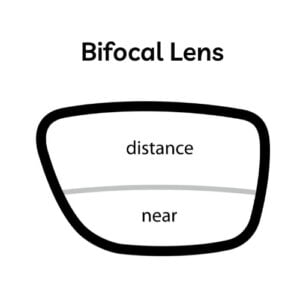
Bifocal lenses are multifocal, meaning they have two different “powers” in them—these different sections of the lens correct distance vision and near vision. Bifocal lenses are prescribed for people with multiple vision problems, such as presbyopia (age-related farsightedness) and myopia (nearsightedness).
Trifocals
Trifocal lenses are similar to bifocals, except that they have an additional power to correct intermediate vision. The intermediate portion may be used to view a computer screen, for example.
The main shortcoming of bifocals and trifocals is that they have a distinct line between each field of vision. This makes the sections of the lens produce drastically different vision. Most people get used to this and don’t have an issue, but this drawback has led to the development of more advanced lenses, such as progressives.
Progressives
Progressive lenses work for anyone who needs bifocals or trifocals. They provide the same correction for near, intermediate, and distance vision without the lines between each section. Many people prefer these lenses because the transition between fields of vision is smoother. However, progressive lenses have a smaller overall field of vision, which causes some people to return to bifocals or trifocals.
Digital Protection (Blue Light Blocking)
Blue light glasses, also called computer glasses, are becoming more and more popular, especially among the millennial generation. Most adults spend a significant portion of their day on their computers, phones, and tablets. These glasses can help prevent digital eye strain and help improve your sleep schedule.


Recent Comments